Inside Lawachara National Park, the afternoon sunlight was falling through the gaps between the trees. Visitors were walking along the forest trails while the sounds of birds and dry leaves filled the air. In the middle of that crowd, 55-year-old Parveen Begum was slowly patrolling the forest with a bamboo stick in her hand.Wearing a green apron over her sari, sweat covered her face as she walked through the dense forest. Every now and then she stopped to look at the trees, almost like she was looking at someone familiar. As she moved deeper into the forest, her pace became slower. Age has clearly started to weigh on her body, but there is still no break in her daily duty.
Parveen has been guarding this forest for nearly 22 years. She works eight-hour shifts, but gets duty only six days a month. In return, she earns just 1,800 (BDT).
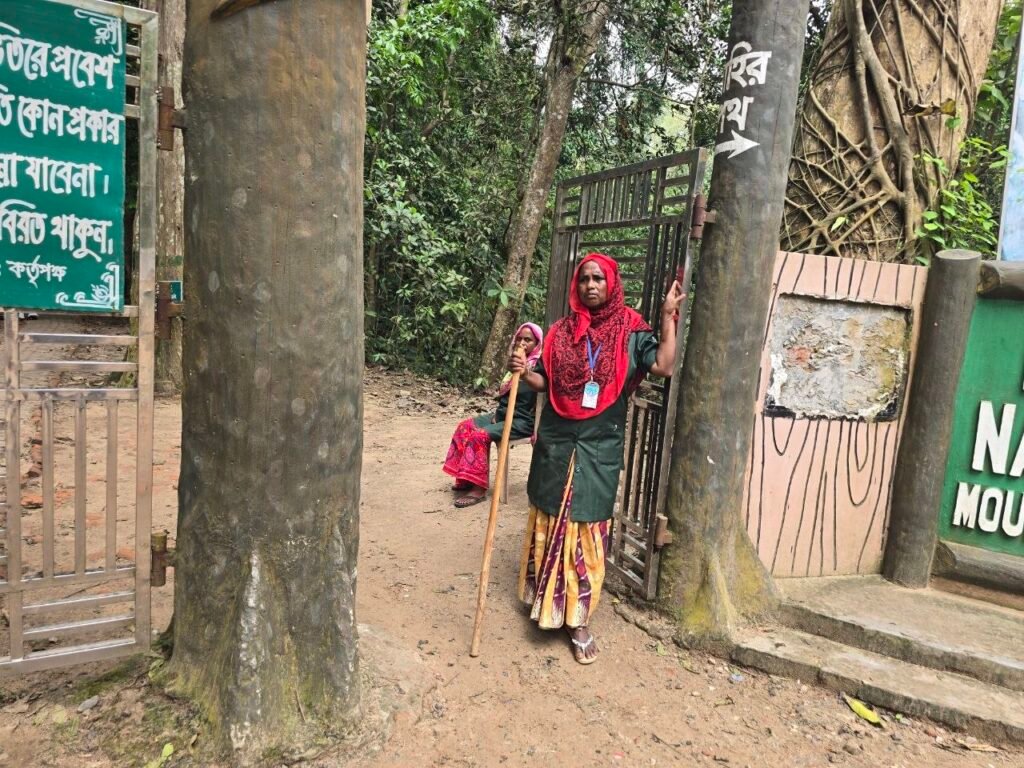
She knows very well that such an income is not enough to run a family. Still, she never left the job. Over the years, she has developed a deep attachment to the forest. The trees, vines and old trails have become part of her life.
Looking at an old sal tree, she said softly, “I saw many of these trees when they were still small. Now they have grown up in front of my eyes.”
There was pride and affection in her voice, almost like she was talking about her own children.
Lawachara is one of Bangladesh’s most important forests for biodiversity. Every day, hundreds of visitors come here to enjoy nature, take photographs or simply breathe in some fresh air.
But very few people know the stories of the people quietly protecting this forest every day.
Parveen and the other women forest guards do much more than simple patrol work. They have to watch whether anyone is damaging trees, whether there is any risk of fire, and whether visitors are following the rules.
While walking through the forest, Parveen suddenly stopped beside a tree. Someone had carved a name into its bark. She touched the scar on the tree and stayed silent for a few moments.
“It feels bad to see these things,” she said quietly. To her, trees are not just wood. They feel alive.
Patrolling inside the forest for hours is not easy, especially for women. During the rainy season, leeches become common. The muddy and slippery paths make walking difficult, and there is always the fear of poisonous insects or animals hiding inside the bushes.
At one point, Parveen bent down and touched her leg. “Something bit me during duty one day. It still hurts,” she said.
Part of her leg remains swollen. She could not even get proper treatment because there is no medical support for the forest guards. If they become sick or injured, they have to manage everything with their own money.
The problems go beyond healthcare. There is no proper arrangement for safe drinking water for them. Even after working long hours inside the forest, there is no food support. Women also face difficulties managing basic sanitary needs during work.
“There is not even a proper water arrangement here,” Parveen said.
Around 15 women are currently working as forest guards in Lawachara. Some have worked there for nearly two decades, while others have spent more than 20 years protecting the forest. Yet their salaries have barely changed.
One of them is Laila Begum, who has spent 25 years working in the forest.
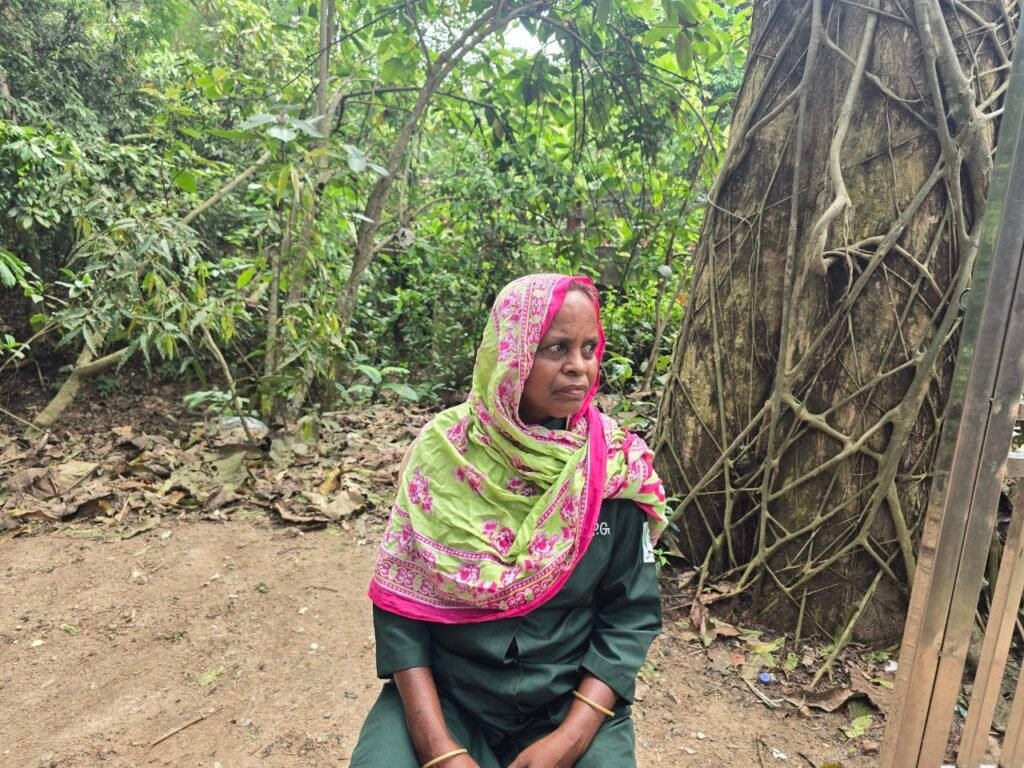
When asked why she still continues this work despite such low pay, Laila smiled.
“We feel attached to this place. After spending so many years here, the forest feels like our own,” she said.
That single word “attachment” seems to carry the story of her entire life.
When these women first started working, they often faced criticism from society. People would stare at them or make comments.
“People used to say, why are women guarding forests?” Laila recalled.
But over time, things slowly changed. Now visitors recognize them. Some greet them respectfully, while others stop and talk to them. Many are surprised to see women spending decades doing such difficult work inside a forest.
Still, while the respect may have increased, their working conditions have not improved much.
Dhoritri Rokkhai Amra ( DHORA) member secretary Sharif Jamil believes these women have been working for years with low wages, limited facilities and almost no security.
According to him, the lack of proper salary, benefits and safety remains one of the biggest challenges for these workers.
He said the people working directly to protect forests deserve proper recognition and support.
“If their rights, security and recognition are not ensured, forest conservation cannot become sustainable,” he added.
Speaking about the issue, Kamalganj and Moulvibazar Upazila executive Officer Md. Asaduzzaman said steps would be taken to reduce salary discrimination and create a safer working environment for women forest guards.
Even after hours of walking inside the forest, Parveen often becomes exhausted. Still, she does not stop until her duty is over. She believes that without them, the forest would suffer even more damage.
As visitors continued walking past her, Parveen once again tightened her grip on the bamboo stick and slowly disappeared deeper into the forest.
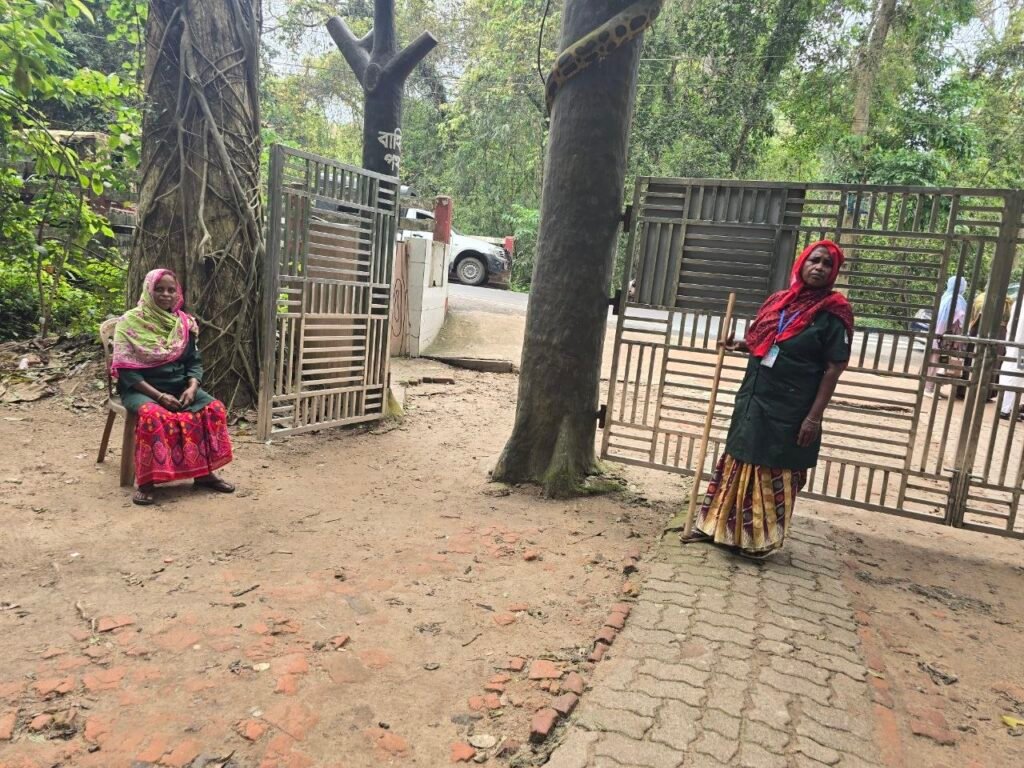
The forest has not given her much. Not financial security, not proper safety, not even a stable life.
Yet she stayed. Because some bonds cannot be measured in money.