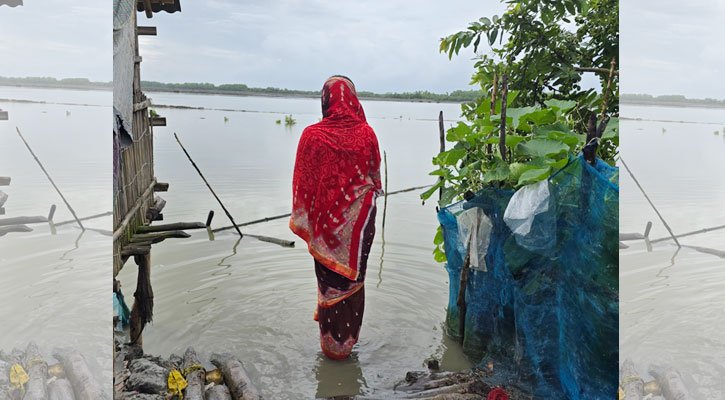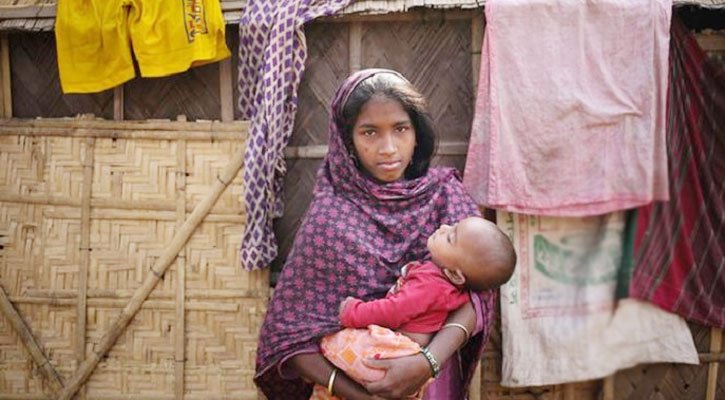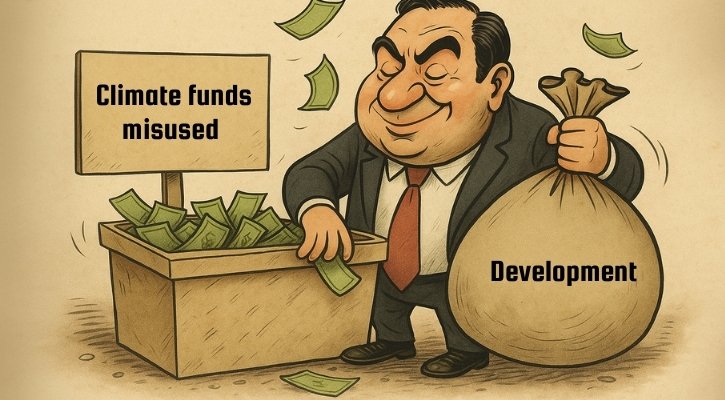
In 2020, Transparency International Bangladesh (TIB) and SOAS University of London jointly published research revealing extensive corruption and waste in climate projects. According to their findings, approximately 35% of adaptation project funding was embezzled, leading to incomplete or substandard embankments, cyclone shelters, and critical infrastructure.
In the coastal districts of Barguna, Satkhira, and Patuakhali, corruption in four projects ranged from 14% to as high as 77%. In seven mitigation projects, about 54.4% of funds—roughly Tk37 crore—were either misused or stolen. NGOs reportedly had to pay up to 20% in bribes to access funds. The most severe corruption was found in embankment projects in Satkhira, with 77% of allocated money misappropriated— the highest in the country.
The report cited political interference, awarding incompetent sub-contracts, and a lack of quality control as primary reasons why the embankments and infrastructure were neither durable nor effective, exposing communities to disasters.
During much of this time (2009–2013), Hasan Mahmud served as Forest and Environment Minister under the Awami League government. TIB’s findings showed particularly high irregularities in cyclone shelter construction in Barisal. Though Barguna saw somewhat less misappropriation, Satkhira’s embankment projects were the most corrupt.
The 2011 water management project in Barisal saw Tk140 crore—14.36% of its Tk975 crore budget—stolen. In 2016, embankment construction in Barguna and Patuakhali lost Tk16.8 crore of its Tk72 crore allocation to corruption—23.37%.
More alarmingly, in 2019, the Manu River Pump House project lost 63% of its funds to graft: Tk34.4 crore out of a Tk54.83 crore budget. In 2020, a Koyra embankment restoration project with a budget of Tk1,200 crore lost 76.92% of its money to waste and corruption.
Project approval through political interference
Between 2009 and 2024, Bangladesh implemented 281 climate projects. Of these, 138 were in coastal regions (Barisal, Chattogram, Khulna), while the Barind region (Rajshahi, Rangpur) and inland districts received only 143 projects. Recent years have seen projects in the Barind region decline to just 63, far short of meeting the real needs of vulnerable communities, according to the Center for Participatory Research and Development (CPRD).
CPRD’s research found that many projects were directly shaped by political influence, especially by MPs and local leaders. The allocation of funds often favoured less vulnerable areas associated with those in power, sidelining communities in genuine need. In 45% of projects, truly vulnerable populations were excluded. In 35%, local administrations took biased decisions.
CPRD Executive Director Md. Shamsuddoha said the greatest corruption occurred in embankment projects due to the opportunity for large-scale embezzlement—sometimes even in places that did not need embankments. He added, “Most projects are designed to serve political interests or to influence elections. Much of the funding goes to non-climate projects that do not improve the lives of climate-affected communities. As a result, Bangladesh’s climate vulnerability is only increasing.”
He recommended reforming the BCCTF board by including independent experts instead of only ministers, secretaries, and political figures. To ensure transparency, he also called for an independent commission to oversee fund disbursement and project monitoring.
Project expired, but remains unfinished
In 2020, the Ministry of Water Resources launched an embankment rehabilitation project in Koyra. Work began in December 2022, with the two-year project scheduled for completion by December 2024. The deadline has since been extended by another year, yet only 30% progress has been achieved, sparking frustration among local residents.
Imdadul Haque of Madinabad village said, “Though Tk1,200 crore was allocated for embankment repairs, hardly any visible progress has been made. Even after the fall of the Awami League government on August 5, the work hasn’t accelerated. In the rainy season, high tides flood the river. Many embankments remain vulnerable. The government must not allow this looting to continue. We demand prompt implementation.”
Mokbul Ahmed of Sathalia village added, “Cyclones and tidal surges have repeatedly destroyed embankments, roads, houses, schools, mosques, crops, and fish farms. We need a sustainable embankment. We don’t want to float in saltwater anymore. If the embankment were strong, our farms and ponds would sustain our families.”
Imtiaz Uddin, General Secretary of the Koyra Development Struggle Coordination Committee, said that when the Tk1,172 crore embankment project was approved on November 23, 2021, people were hopeful. But the work has progressed at a snail’s pace.
According to the Water Development Board (WDB), the project was entrusted jointly to Khulna and Satkhira-2 divisions. Through tenders, 25 contractors were selected to construct about 32 km of permanent embankments along the Kapotakkho and Shakbaria rivers. However, delays and disputes over land acquisition have caused tension between contractors and locals.
There are allegations that parts of the embankment are being built on private land without formal acquisition.
WDB Executive Engineer Md. Ashraful Alam said, “Out of the Tk1,172 crore budget, only 20–22% of funds have been released. Physical progress is 30%. The project period extends to December this year, and more time will be needed. No new contractors have been appointed; the existing ones remain.”